Displacement can interrupt school in one night and narrow opportunity for years.
The crisis is not a shortage of talent. It is the loss of continuity, credentials, language access, safety and a reliable route back into learning.
See KnowArk’s responseOne disruption creates the next.
Flight
Conflict or persecution can separate a learner from teachers, records, devices, books and the expectation that school will reopen.
Arrival
A new education system may require unfamiliar documents, fees, transportation, language ability or placement rules.
Waiting
A temporary interruption can stretch across the years when a learner should be moving from primary to secondary school.
Refugee enrollment is far lower at secondary and tertiary levels.
Primary enrollment
UNHCR’s 2025 report gives this estimated primary enrollment rate for refugee learners.
Secondary enrollment
The pathway narrows sharply during the years most connected to credentials and future study.
Tertiary enrollment
Too few refugee learners reach university even after navigating every earlier barrier.
Source: UNHCR Refugee Education Report 2025. Rates describe different education levels across available reporting countries, not the same tracked cohort moving through school. See the report for denominators and reporting period.
A student can live near a school and still be locked outside it.
Many refugees live in cities and towns rather than camps. In Cairo, Nairobi, Amman and other urban centers, families are dispersed across neighborhoods. Fees, transportation, documentation, overcrowding, work obligations, language barriers and fear of being noticed can place education out of reach.
Admission alone does not guarantee belonging. Refugee students may experience xenophobia, racism, bullying and humiliation from classmates and, painfully, from teachers, administrators or other adults entrusted with their education. Repeated exclusion can make a learner stop raising a hand, stop attending or leave school altogether.
The barriers are structural, not intellectual.
Myth: refugees are mostly in camps
Reality: many live across ordinary urban neighborhoods where services can be harder to locate and coordinate.
Myth: online access means studying alone
Reality: KnowArk’s proposed hybrid model would pair digital learning with trusted local centers, educators and peer support once academic and safeguarding arrangements are approved.
Myth: interrupted education means limited potential
Reality: interrupted schooling reflects disrupted access. It does not measure intelligence, determination or future contribution.
Education that can move with the learner and still provide a place to belong.
Portable coursework
Online-first access helps learning continue across neighborhoods, cities and borders.
Hybrid partner centers
Local centers can provide devices, connectivity, facilitation, safeguarding and human support.
Four connected pathways
High school coursework, TVET, ESL and college preparation address credentials, livelihood, language and transition barriers together.
Why refugee secondary education breaks down
Follow the transition from primary to secondary and tertiary education, examine the barriers facing urban refugee learners, and see how hybrid learning can combine portability with local support.
Read the evidence briefThe crisis is not a lack of ambition.

Access can disappear
A move, a fee, a missing document or an unsafe commute can separate a learner from school even when a classroom exists nearby.

Absence becomes a learning gap
When lessons continue without the student, missed days can become lost confidence, repetition and eventual exclusion.
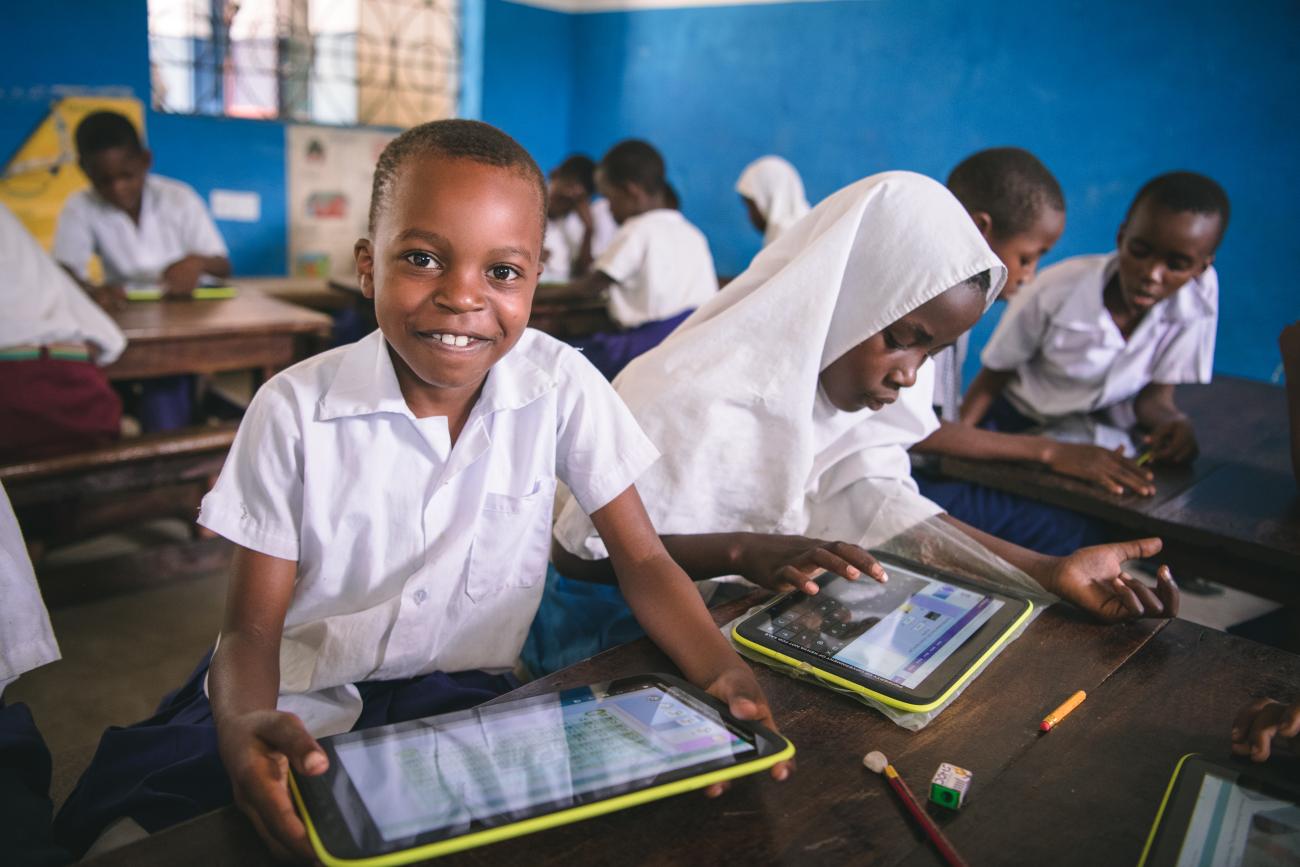
Continuity can be designed
Portable coursework and community-based support can help learning continue across disrupted schedules and changing locations.