We believe displacement should interrupt a place, not a future.
KnowArk is developing a refugee-centered K–12 model, beginning with a proposed high-school pathway and expanding toward younger grades over time. No new high-school cohort or diploma pathway is open. The goal is to connect credible academic options with practical skills, English learning and college preparation.
His lived experience grounds the mission.
Ashraf left Sudan in 2004 because of his father’s political background. Over roughly 18 years as a refugee, he attended school in five countries. Every transition could have ended his education. Instead, access and human belief kept extending it. That lived journey now informs KnowArk’s K–12 vision: begin with high school, then expand backward so younger learners can preserve momentum before years of disruption accumulate.
Refugee learning spaces
Education continued without the security, continuity or institutional access many students take for granted. This experience became the blueprint for an academy designed around mobility.
African Leadership University
Ashraf graduated from ALU, an institution built around leadership and African transformation. The experience strengthened his conviction that refugee students must be prepared not only to enter university, but to lead.
Thunderbird School of Global Management at ASU
He earned a Master’s in Global Management summa cum laude as a SHARE Fellow and completed the program in the top 10% of his class.
Learning, design and technology
Ashraf continued into graduate study at Stanford GSE, bringing lived refugee experience into the design of learning systems capable of reaching students traditional institutions leave behind.
Knowledge Ark
KnowArk exists because Ashraf’s story should not be exceptional. The goal is to replace accidental opportunity with a dependable pathway: diploma, English, technical skills, college readiness and people willing to take the next chance.
It began with an empty chair in a fifth-grade math class.
In 2013, after graduating, Ashraf returned to teach at St. Andrew’s Refugee Services, known as StARS, the same refugee center that had helped educate him. He taught fifth-grade mathematics and quickly saw that absence, not ability, was pulling students behind.
The first KnowArk classroom
Students missed lessons because their families were managing school fees, transport costs, unstable work, caregiving, documentation, illness and the uncertainty of displacement. Some parents faced an impossible calculation: pay for transport to school or meet an urgent household need.
Ashraf first tried helping students catch up during recess. The approach took away the short part of the day when children could play, and repeating lessons student by student could never match the scale of the problem.
He began placing lessons and learning materials on Moodle. A learner who missed class could reconnect with the lesson later. That practical experiment carried the first KnowArk principle: education should adapt to disruption instead of punishing a child for circumstances outside that child’s control.
The pattern was bigger than attendance
When capable students repeatedly fall behind for the same financial and logistical reasons, the problem is not effort. It is a learning model built for stability that refugee families may not have.
The technology protected continuity
Moodle connected the classroom to the days a learner could not reach it. The platform did not replace the teacher. It preserved the relationship between teacher, lesson and learner.
A full-time commitment in 2018
Ashraf took KnowArk full-time in 2018. The example and mentorship of Fred Swaniker helped him recognize that his refugee experience, education and proximity to the problem were not separate chapters. Together, they positioned him to build.
From borrowed infrastructure to independence
The early years demanded persistence. KnowArk raised support through other organizations, worked with limited infrastructure and faced the challenge common to refugee-led ideas: proving institutional credibility before being given the resources to build it. Knowledge Ark Inc. ultimately secured independent nonprofit status, creating a stronger foundation for governance, fundraising and growth.
“The only way that we can justify privilege is by solving the world’s biggest problems, and by doing hard things.”Fred Swaniker, TIME100 Gala toast, 2019
Students wanted to learn. What they lacked was continuity when money, movement, work or family responsibilities interrupted the week.
KnowArk combines portable digital coursework with educators, mentors and partner centers. Flexibility expands access. Human support helps students persist.
Many urban refugees live within reach of a mobile network. Data costs, shared devices, electricity, safety and digital skills can still shut the door. UNHCR connectivity research explains why access must be designed, not assumed.
A learner can live minutes from a classroom and still be excluded by fees, documents, overcrowding, language, xenophobia or racism. Harmful treatment can come from classmates and, at times, from the adults responsible for teaching them.



Education cannot depend on stability a learner does not control.
A refugee learner may cross a border without transcripts, enter a city without access to a school, study in a new language and take on work to support family, all while carrying the same ambitions they had before displacement. KnowArk exists to build continuity where traditional systems break.
Our answer is an online-first academy strengthened by educators, mentors, partner centers and institutions that can help learners move toward graduation, work and university.
Our north starDo not measure a learner by what displacement took away. Build the pathway around what that learner can still become.
Designed for dignity. Built for mobility.
Access that travels
Online learning can follow a student across neighborhoods, cities and borders instead of forcing education to restart after every move.
Credentials that open doors
Students need more than content. They need credible outcomes, practical skills and preparation for the next institution or employer.
Human support that stays
Technology expands reach; teachers, mentors and trusted local partners help learners persist when circumstances are difficult.
A public mission with accountable foundations.
An Arizona nonprofit corporation formed January 12, 2024.
Tax-exempt nonprofit status effective in 2024. Contributions may be tax-deductible to the extent allowed by law.
Use this current EIN for donor records and verification.
KnowArk is contacting ASU Prep Academy to identify the appropriate decision-makers and explore whether a partnership is possible. No agreement or approval has been finalized, and no course access, credit, transcript, enrollment or diploma route is currently available.
Digital continuity strengthened by trusted refugee centers.
KnowArk is developing a model that would pair portable online learning with in-person support at future partner centers. Any learner-facing site would need approved academic, operational and safeguarding arrangements.
Structured learning can continue when schedules, housing or location change.
Centers can help learners reach devices, connectivity and safe study space.
Educators and mentors support progress, belonging, assessment and persistence.
Online reach and community-based support work together to reduce barriers for urban refugee families.
Building a connected route from interrupted schooling to recognized opportunity.
KnowArk cannot build every part of an education system alone. Our proposed model connects credible academic options, flexible delivery, local support, university opportunities and community expertise around the learner.
Exploring whether an ASU Prep pathway is possible
KnowArk is contacting ASU Prep Academy to find the right people and understand whether a future academic arrangement is possible. There is no agreement, approval or learner access to ASU Prep courses, credits, transcripts, enrollment or a diploma through KnowArk.
KnowArk will not open a learner cohort through this proposal unless ASU Prep approval and the required contracting and authorizations are complete. Only then can course, cost, credit and credential terms be described.
Register learning interestScholarship collaboration with African Leadership University
KnowArk and African Leadership University have confirmed a scholarship collaboration. KnowArk sets the scholarship terms. Applications and awards are not yet open. ALU admission is separate; KnowArk will publish specific eligibility, covered and excluded costs, award limits and renewal conditions before applications open.
Help build the scholarship fundRelationship note: this ecosystem includes work in progress, founder affiliations, tools used by KnowArk and sector institutions. Inclusion does not imply sponsorship or endorsement.
 Learning continuity
When travel costs interrupt lessons, learning should remain reachable.
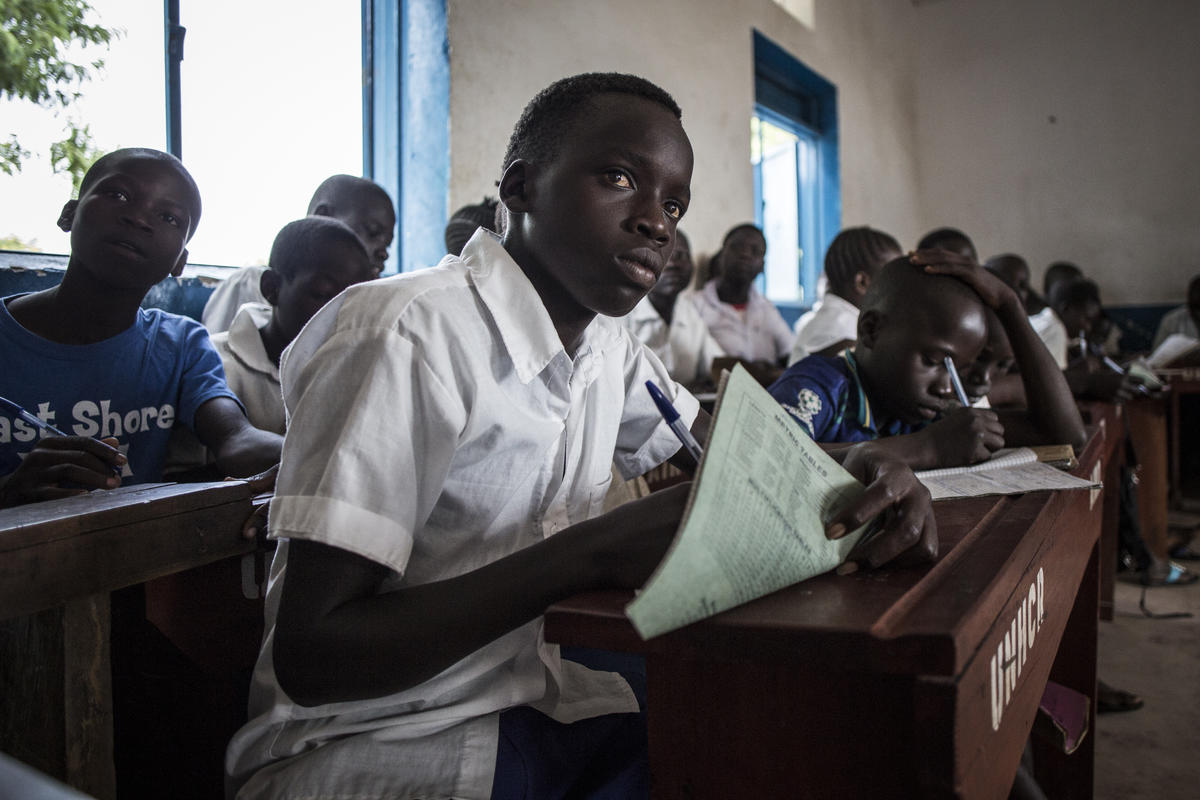
Transport, caregiving, relocation or lost income can make regular attendance difficult. Missing a week should not mean losing the thread of a course.
Proposed response: flexible lessons and a trusted local educator or center could help a learner reconnect when approved delivery is in place.
 Portable records
When school records are interrupted, the next step must be clear.
Moving between education systems can leave a learner with coursework that does not translate easily into an accepted credential.
Proposed response: KnowArk is exploring whether an approved academic arrangement could provide recognized courses and clearer records. No ASU Prep route exists yet.
 College readiness
When university feels distant, the steps need to be visible.
Language requirements, academic preparation, applications and scholarship information can feel like separate systems.
Proposed response: future English, college-preparation and mentoring support could help learners understand those steps; services will be announced when ready.
Headquartered in Phoenix. Shaped by learning in Cairo.
KnowArk is developing online and partner-center options shaped by cross-border learning needs. No new high-school cohort is currently enrolling.
Reported community connections
Nationalities represented
These countries and nationalities describe reported historical community links, not a current enrollment count. KnowArk will publish dated, verified inquiry, participation, enrollment and completion totals separately.
Follow the work as it grows.
Read founder reflections, partnership updates, learner stories and practical insights about refugee education, technology and access.